Build a Vision 2030 mobile app in Saudi Arabia: 15–26 week delivery, Mada/STC Pay, Arabic-first UX, funding routes, and the sourced 2025 and H1 2026 Saudi venture figures.

How do I build a Vision 2030 mobile app in Saudi Arabia?
A custom mobile app for Saudi Arabia needs Arabic-first UX and payment integrations scoped against current provider requirements, with timeline confirmed after discovery. Ijjad builds to that scope and reports 20+ government and enterprise digital products; supporting client and deployment records are private.
- Target the funded sectors: fintech, healthtech, logistics, e-commerce, govtech.
- Payment-method scope should follow the Saudi audience, the merchant setup and the regulatory requirements.
- Cross-platform can reduce duplicated work, but the result depends on native features, integrations, QA scope.
- Saudi funding options include Wa’ed, Misk or SVC; eligibility must be checked with each current programme.
Saudi Arabia's Vision 2030 market is looking for useful mobile apps in fintech, healthtech, logistics, e-commerce, tourism, government services. This guide shows founders and SMEs how to plan a Saudi mobile app with Arabic UX, with Mada and STC Pay readiness, with realistic delivery phases and with a launch path that can survive App Store review.
Market context · Saudi digital economy, 2026
Saudi Arabia's digital economy reached 16.0% of GDP in 2024 per the General Authority for Statistics (GASTAT, December 2025), and Vision 2030 keeps pushing digital-first services across fintech and health as well as government.
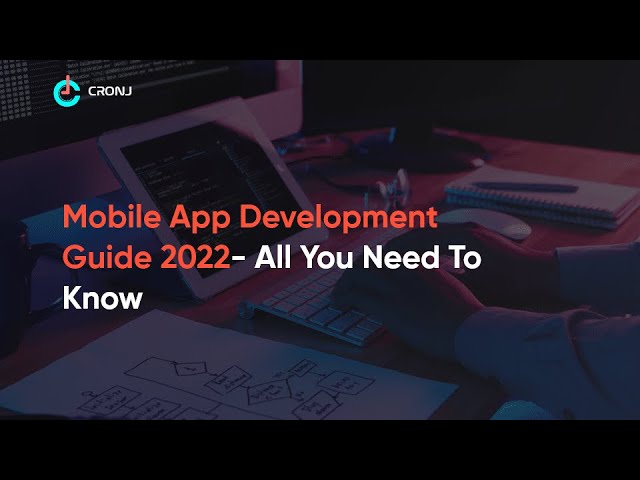
How to Make an App — Mobile App Development Process Guide
Watch on YouTube
The five-phase shape shown here (discovery, design, build, test, launch) is the same sequence we run for a Vision 2030 app, just with Saudi-specific layers (Arabic RTL, Mada/STC Pay, SAMA/MOH compliance) bolted on.
Saudi VC deployed in 2025 (MAGNiTT)
Internet use, ages 15–74, 2025 (GASTAT)
Saudi VC deals in 2025, a record (MAGNiTT)
Cellular connections, late 2025 (DataReportal)
Why Vision 2030 Is Creating a Mobile App Gold Rush
Saudi Arabia isn't just digitizing. It's rebuilding its entire economy around technology. Vision 2030, the Kingdom's ambitious national transformation plan, has turned the country into the fastest-growing digital market in the Middle East. And mobile apps sit at the center of this transformation.
The digital economy contributed 16.0% of Saudi GDP in 2024 according to GASTAT, and 99.0% of individuals aged 15–74 used the internet in 2025. Saudi Arabia ranked 6th globally in the United Nations E-Government Development Index 2024 (EGDI 0.9602, rank 6 of 193, up from 31st in 2022), ahead of most Western European countries.
For businesses, startups or entrepreneurs in Jordan and the broader GCC region, this represents a once-in-a-generation opportunity. The Saudi market is hungry for well-built mobile applications across healthcare, fintech, logistics, e-commerce, government services. But to succeed, you need more than a good idea. You need a clear strategy, the right technology, and a development partner who understands this market deeply, which is exactly how Ijjad approaches mobile app development in Saudi Arabia.
This guide walks you through everything: the market opportunity, top industries to target, funding sources that can finance your entire project, the right technology stack, realistic scope breakdowns, a proven development roadmap from concept to App Store.
The Numbers Behind the Opportunity
Before committing resources to mobile app development, you need to understand the scale of what's happening in Saudi Arabia. These aren't projections. They're current realities that define the market landscape.
Saudi VC in 2025 vs 2024: $1.72B on about $700M
Into Saudi fintech across 55 deals in 2025
H1 2026 vs H1 2025: $219M across 72 deals
Saudi Arabia recorded $1.72 billion across 257 venture deals in 2025, its third straight year at the top of the MENA table and a rise of more than 145% on the roughly $700 million deployed in 2024, with fintech the largest sector at $506 million across 55 deals (MAGNiTT report via the Saudi Press Agency, 21 January 2026). In the first half of 2025 alone the Kingdom took 56% of all MENA venture capital, and e-commerce was the top sector by value at $306 million (SPA, 22 July 2025).
The first half of 2026 was much quieter. Venture investment fell 74% to $219 million across 72 deals, the UAE moved ahead at $895 million, and Saudi Arabia kept a 34% share of MENA deal count; fintech still took $147 million, 67% of the half-year total (MAGNiTT data via Argaam, 1 August 2026). Read the two halves together: the capital base is real and the sector focus is stable, but a founder scoping an app in 2026 should not assume the 2025 pace.
On the consumer side there is no adoption gap left to wait for. There were 48.7 million cellular connections in Saudi Arabia at the end of 2025, 140% of the population, 98.5% of them broadband (DataReportal Digital 2026: Saudi Arabia), and 98.4% of individuals aged 15–74 use a mobile phone to access the internet (GASTAT, 2025).
Saudi Arabia venture capital by year
Deal value in US$ millions and deal count, MAGNiTT data as published by Argaam on 1 August 2026
Source: Argaam, "Venture capital in Saudi Arabia falls 74% to $219M in H1 2026", table of MAGNiTT data. The 2025 deal count in this series (242) differs from the 257 in MAGNiTT's January release; both are quoted as published.
5 Industries Where Mobile Apps Win Big Under Vision 2030
Not every mobile app idea has equal potential in the Saudi market. Vision 2030 has created investment priorities across several sectors. The following areas are worth researching, but funding access and success depend on the programme, the applicant, the timing, the evidence and the product.
| Period | Sector figure published by MAGNiTT | Source |
|---|---|---|
| 2025 | Fintech was the most-funded sector: more than $506M across 55 deals, out of $1.72B in total | SPA, 21 Jan 2026 |
| H1 2025 | E-commerce led by value at $306M, 36% of capital deployed; fintech led by deal count with 30 deals, 26% of all deals | SPA, 22 Jul 2025 |
| H1 2026 | Fintech took $147M, 67% of a $219M half; gaming became the most-transacted sector for the first time | Argaam, 1 Aug 2026 |
MAGNiTT does not publish a full sector split in its press releases, so this page does not draw one. The rows above are the sector figures that were released, with their dates.
1. Fintech & Digital Payments
Fintech is the most-funded Saudi sector by a distance: more than $506 million across 55 deals in 2025, and $147 million, two thirds of all Saudi venture money, in the first half of 2026, with rounds for Madfu, Stitch and SciFy named in the report. Buy Now Pay Later, digital wallets and Islamic-finance products are where that capital is going. If your app moves money, the market and the investors are already there; the regulator is too, so budget for SAMA licensing questions from day one.
2. Healthcare & Telemedicine
Saudi Health Vision 2030 is driving digital transformation across the entire healthcare sector. The government has introduced AI-enabled platforms to support data-driven health policy and clinical decision-making. Telemedicine apps, digital health records, patient monitoring systems, and mental health platforms represent a growing opportunity, especially as the Kingdom works to reduce dependency on in-person healthcare visits in remote areas.
3. E-Commerce & Retail
E-commerce was the top Saudi venture sector by value in the first half of 2025, at $306 million and 36% of capital deployed, and Saudi shoppers put SAR 29.86 billion through mada cards online in July 2025 alone (SAMA data via Arab News). Super apps, meaning applications that offer multiple integrated services within a single platform, are gaining serious traction across the Middle East. Localized e-commerce platforms with Arabic-first interfaces, multi-currency support, and local payment gateways are well-positioned for growth.
4. Logistics & Smart Transportation
NEOM, The Red Sea Project, and dozens of mega-developments need logistics infrastructure. Last-mile delivery apps, fleet management tools, warehouse automation platforms, and supply chain visibility applications are all categories where Vision 2030 spending is creating immediate demand.
5. Education & Workforce Development
Vision 2030's Human Capability Development Program puts upskilling at the centre of the plan, and a population where 99.0% of 15-to-74-year-olds are online can be reached by an app rather than a classroom. EdTech apps that focus on Arabic-language professional development, vocational training, and certification platforms align directly with the Kingdom's workforce development goals.
Identifying the right industry is step one. Building an app for Saudi users requires scoping the relevant payments, data and sector requirements first. Ijjad's mobile app development team builds and runs Mihbaj, Ijjad's own multi-tenant Saudi product, so its engineering is open to inspection; client engagements stay anonymized under NDA.
How to Fund Your App: Grants, VCs or Government-Backed Programs
Vision 2030 is associated with several funding and accelerator channels for technology ventures. Availability, eligibility, terms, application dates, sector fit: each needs current verification with the programme itself.
| Funding Source | Type | Amount | Best For |
|---|---|---|---|
| Wa'ed Ventures (Aramco) | Venture Capital | Deal-specific funding | Growth-stage tech startups |
| Misk Accelerator | Accelerator | Non-dilutive (no equity) | Early-stage, 12-week mentorship |
| National Technology Development Program | Government Grant | Varies | Tech companies with local impact |
| Saudi Venture Capital (SVC) | Fund of funds + direct investment | Not disclosed per deal; SVC sponsors the MAGNiTT reports quoted above | Pre-seed to pre-IPO via partner funds and direct rounds |
| Plus VC | Early-Stage VC | Regional fund (2026) | Seed-stage startups (40+ deals planned) |
| Monsha’at (SME Authority) | Government Support | Micro-loans + services | SMEs and first-time founders |
Saudi Arabia has funding and accelerator options at different venture stages, but eligibility, terms, dates, availability must all be checked with each program. The examples below are starting points for current due diligence, not a promise that every applicant or stage is covered.
Founders based in Jordan or elsewhere in the GCC should verify applicant-location rules directly with each programme. A clear technical roadmap, evidence of demand, and an appropriate delivery plan for Saudi Arabia can support due diligence, but no development partner can guarantee funding.
Choosing the Right Tech Stack for the Saudi Market
The framework you choose for your mobile app has real implications for scope, speed-to-market, maintainability, user experience. In the Saudi market, where Arabic RTL (right-to-left) support and bilingual interfaces are essential, this decision matters even more.
| Factor | React Native | Flutter | Native (Swift/Kotlin) |
|---|---|---|---|
| Development Speed | Fast — single codebase for iOS + Android | Fast — single codebase with hot reload | Slower — separate codebases required |
| Arabic RTL Support | Good — built-in RTL with I18nManager | Excellent — native Directionality widget | Excellent — platform-native RTL |
| Performance | Near-native, excellent for most apps | Superior rendering via Skia engine | Best — direct hardware access |
| Development Cost | Single codebase — lower cost | Single codebase — lower cost | Two separate builds — roughly 2x the cost |
| Developer Availability | Highest — large global community | Growing fast — strong Google backing | Moderate — specialized talent needed |
| Best For | Startups, MVPs, web-first companies | Pixel-perfect UI, fintech, media apps | Enterprise, hardware-heavy, gaming |
Cross-platform development with React Native or Flutter can reduce duplicated iOS and Android work when the product's hardware, performance and platform requirements all allow it. The actual schedule and scope difference depends on integrations, native modules, QA, store requirements, team skills. React Native may fit teams already using React; Flutter may fit products that prioritize a consistent custom rendering layer.
Native development (separate Swift for iOS and Kotlin for Android) can fit products that require deep hardware integration, advanced camera features, or real-time sensor data. Cross-platform can reduce duplicated work when its performance, security, native-module, UX trade-offs satisfy the actual acceptance criteria; cost and quality still depend on scope.
Local market consideration: Whichever framework you choose, ensure your development team has proven experience with Arabic RTL interfaces, with bilingual content management and with Saudi-specific payment gateways (Mada, STC Pay, Apple Pay Saudi). These aren't nice-to-haves. They're table stakes in the Saudi market.
What Does It Actually Scope to Build an App in Saudi Arabia?
Let's talk real numbers. Development scopes in the Saudi market vary significantly based on app complexity, on the team you hire and on whether you build in-house or work with an agency. Here's a transparent breakdown based on current 2026 market rates.
Delivery Complexity by App Type
Saudi Arabia, 2026 (cross-platform development; scope confirmed after discovery)
The bars show relative complexity only. Milestones are confirmed after discovery and dependency review.
What Drives the Scope Up?
Major scope factors include bilingual Arabic-English UX, payment and identity integrations, data requirements, testing, stakeholder approvals. Each adds work according to the actual flows and provider access; a fixed percentage or number of weeks cannot be established before discovery.
Developer Hourly Rates in Saudi Arabia (2026)
Hourly rates quoted for “MENA developers” on listicle sites are not sourced to anything a buyer can check, so this page does not repeat them. For published third-party ranges with their sources, see what a mobile app costs in Saudi Arabia in 2026; for a number that applies to your build, ask for a written scope.
A regional or Riyadh-based team can both fit, depending on stakeholder access, procurement, seniority, scope, support. Compare like-for-like proposals instead of assuming location determines value. Ijjad reports 20+ government and enterprise digital products; supporting client and deployment records are private. Request a written scope.
From Idea to App Store: The Development Roadmap
Building a mobile app for the Saudi market follows a proven sequence. Skip a step, and you'll likely pay for it later, either in redesign scopes, failed launches, or missed market timing. Here's the roadmap we use for Vision 2030-aligned projects.
Market Research & Requirements
Define target users, languages, demand assumptions, integrations, applicable sector requirements.
Scope-dependentUI/UX Design with Arabic-First Approach
Create and test the required Arabic RTL and English LTR journeys with representative users and stakeholders.
Scope-dependentBuild, Integrate, Test
Build the agreed platforms, backend, integrations, administration, analytics, QA evidence against project acceptance criteria.
Scope-dependentApp Store Submission & Go-to-Market
Prepare localized store assets, submission evidence, analytics, crash reporting, a release plan. Store review remains outside the developer's control.
Scope-dependentIterate, Scale, Optimize
Monitor user behavior and analytics. Push regular updates based on feedback. Optimize for performance and Saudi network conditions. Plan feature expansions. Consider expanding to the UAE, Kuwait or Bahrain using the same codebase.
OngoingThere is no universal timeline for a Saudi mobile app. Platforms, workflows, data, integrations, languages, testing, stakeholder approvals, store or regulator review: together they determine the committed plan.
“Saudi Arabia jumped 27 spots in StartupBlink's global index in a single year — the highest rise among 110 countries. The Kingdom now ranks 38th in the world for startups. That's not a trend — that's a tectonic shift.”
— StartupBlink Global Startup Ecosystem Index 2025
ijjad.comYou now have a clear picture of the opportunity, the industries, the funding, the development process. The question is whether you want to work through this alone or work with a team that has already built national-scale platforms in Saudi Arabia. Talk to ijjad's mobile app team →
7 Mistakes That Kill Mobile Apps in the Saudi Market
Saudi app projects can struggle when local operating requirements are discovered late. Test these recurring risks during discovery:
- Language mismatch at launch. If Arabic-speaking users are in scope, incomplete RTL journeys can exclude or frustrate them. Validate the required languages and critical flows with representative users.
- Ignoring relevant local payments. Confirm which payment methods the target users and merchant can support, including Mada or wallets where applicable. A mismatched checkout can create avoidable payment friction.
- Generic UI copied from Western apps. Saudi users have specific expectations around navigation flow, content density, visual design. A pixel-for-pixel clone of a U.S. app won't resonate.
- No Arabic store-listing plan. If Arabic-speaking users are in scope, test localized titles, descriptions, screenshots, search terms rather than assuming an English listing is sufficient.
- Underestimating regulation. Fintech, healthcare, identity or commerce requirements depend on the product and operator. Confirm the applicable authority and approval path with qualified advisers; discovering it late can delay launch.
- Building features before validating. The Saudi market moves fast, and user preferences differ from Western markets. Build an MVP, launch quickly, measure, iterate. Don't spend 12 months building a “perfect” app nobody asked for.
- Choosing the cheapest developer. The gap between a budget build and a serious build isn't just polish. It's architecture, performance, scalability, security. In a market where government contracts and enterprise deals are on the table, cutting corners on development costs you orders of magnitude more in missed opportunities.
We Audited the Saudi App-Development SERP: Here's What's Missing
Before writing this guide, we reviewed a May 2026 sample of pages appearing for “mobile app development saudi arabia”. The sample helped identify useful topics to cover, but rankings change by date, by location and by personalization, and this is not a complete market census.
Word count, FAQ count, FAQ schema: our original SERP audit (May 2026):
| Page audited (May 2026) | Word count | FAQ count | FAQ schema | Video | Named scoring framework |
|---|---|---|---|---|---|
| Ijjad (this page) | 5,000+ | 6 | Yes | Yes | Yes: Vision-Fit 5D Scorecard |
| Riseup Labs (cost guide) | ~4,800 | 10 | Yes | No | No |
| Appinventiv (cost guide) | ~8,700 | 8 | Partial | No | No |
| JPLoft (cost guide) | ~4,800 | 0 | No | No | No |
Method: we measured each page's on-page word count, counted visible FAQ entries, checked the page source for FAQPage schema, and looked for an embedded video and a named decision framework. None of the top cost guides embed a walkthrough video or publish a repeatable scoring method — so that's exactly what this page adds.
The Ijjad Vision-Fit 5D Scorecard
App ideas can fail even when the code works because the market, payment, operating, or compliance fit was never tested. Before scoping a build, we use five visible dimensions, each out of 5, for a total out of 25. The Vision-Fit 5D Scorecard is simply a reusable planning aid; its name does not create ranking or citation eligibility.
Ijjad Vision-Fit 5D Scorecard
- V: Vision 2030 sector pull. Is your idea in a funded corridor (fintech, health, logistics, e-commerce, govtech)? Funding and demand follow the corridors.
- I: Identity & Arabic-first UX. RTL layout, Arabic typography, bilingual content treated as primary, not a translation bolted on at the end.
- S: Saudi payment rails. Native Mada + STC Pay + Apple Pay + Tabby/Tamara BNPL, not just Visa/Mastercard.
- O: Obligations (compliance). SAMA for fintech, MOH for health, PDPL for data, ZATCA for invoicing, mapped before, not after, the build.
- N: Net delivery model. Cross-platform vs native, MVP scope, a funding-ready roadmap an investor can read.
Want the blank scorecard to run on your own idea? Ask for the Vision-Fit 5D Scorecard worksheet when you get started — we send it free.
In the interest of transparency: our bias
Let's be explicit about the bias: Ijjad authored this comparison and builds Saudi mobile apps, so it is not an independent award or neutral ranking. Buyers should evaluate each option against project fit, live work, team location, stakeholder access, stack, ownership, support, a written scope. A large Riyadh firm may fit daily in-person workshops better, a freelancer may suit a tightly bounded brief, and fully native development may fit graphics- or AR-heavy products better than our usual cross-platform approach. — Karam Abdalqader, Founder of Ijjad.
Ijjad · HQ
Amman, Jordan, serving Riyadh, Jeddah, Dubai, plus the wider GCC. Sun–Thu, 9am–6pm (AST). Reach the team on WhatsApp (+962) or the contact page.
Proof, anonymized
The named client work on this site is live and independently checkable; the government and enterprise projects stay anonymized under NDA. In a separate anonymized first-party Jeddah case, Ijjad reports a 340% conversion-rate lift; underlying analytics are private and the outcome is not a forecast. Ask for relevant current mobile-app evidence before appointing a provider.
Frequently Asked Questions
How long does it take to build a mobile app for the Saudi market?
There is no reliable fixed timeline before discovery. Platforms, workflows, data, integrations, Arabic-English UX, testing, approvals, store review: together they determine the committed schedule.
Can a Jordan-based company build apps for Saudi Arabia?
Yes. A Jordan-based team can deliver for Saudi Arabia when the contract, procurement model, stakeholder access, data requirements, integrations, Arabic-English UX, testing, support arrangements fit the project.
Do I need a Saudi business license to publish an app on the Saudi App Store?
For consumer apps, you can publish from any country using your existing Apple Developer or Google Play account. For apps that process payments or handle regulated data in Saudi Arabia, you may need a local commercial registration or a partnership with a Saudi entity. Consult a local legal advisor for your specific case.
React Native or Flutter for a Saudi Arabia app?
Both are strong choices. React Native is ideal if your team already uses React on the web — it shares the same JavaScript ecosystem. Flutter excels at pixel-perfect interfaces and is popular in fintech. Both support Arabic RTL. The right choice depends on your team’s existing skills and the app’s specific requirements.
What funding is available for tech startups in Saudi Arabia?
Options include Wa’ed Ventures, the Misk Accelerator, the National Technology Development Program, plus the Saudi Venture Capital Company. Eligibility, funding terms, regional-applicant rules: all vary and must be checked with each current programme.
How is annual maintenance scoped for a mobile app?
Plan for maintenance as a recurring line in the proposal rather than a rule-of-thumb share of the build; the right figure depends on the app. This covers bug fixes, OS updates (new iOS/Android versions), security patches, server scopes, minor feature improvements. Major feature additions are typically scoped and scoped separately.
Ready to Build Your Vision 2030 App?
Ijjad reports 20+ government and enterprise digital products; supporting client records are private. Let's talk about the scope and evidence relevant to your project.
Get Your Free Consultation →Source note
Market context: Saudi Arabia's digital economy reached 16.0% of GDP in 2024, according to the General Authority for Statistics, published December 31, 2025. This is why Ijjad treats modern websites, SEO, e-commerce, AI MVPs, and mobile experiences as business infrastructure across Saudi Arabia, Jordan, Iraq, and the GCC.