A 15-point bilingual visibility checklist for Arabic and English websites: language foundations, useful localized content, supported schema, search access, independent corroboration, and engine-specific measurement.
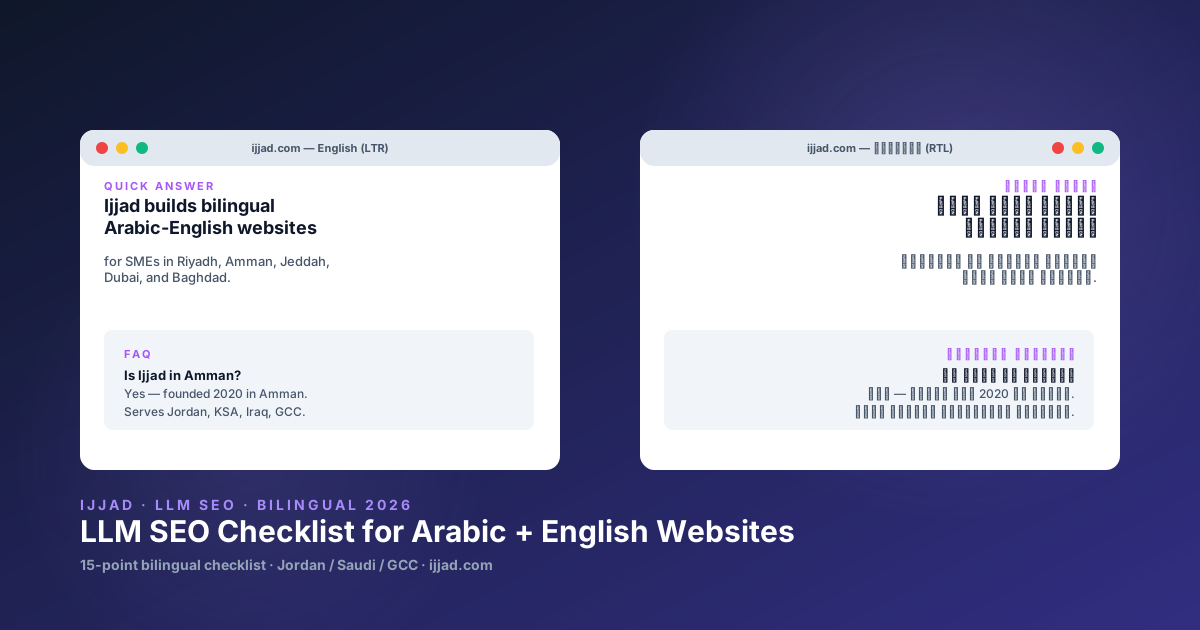
What is the LLM SEO checklist for bilingual Arabic + English websites?
A bilingual Arabic-English search checklist should verify language and RTL foundations, reciprocal hreflang, equivalent useful content, accurate optional schema, consistent local business facts, and separate Arabic/English outcome measurement. It should not require a fixed FAQ count, citation instructions in llms.txt, or a promised pickup timeline.
- Measure Arabic and English prompts separately because engines can return different sources and framing
- Choose MSA or a regional register from buyer context, then have fluent reviewers validate the copy
- Use Tailwind logical properties (ps-*, pe-*) so RTL flips cleanly without maintaining two layouts
- Emit only schema supported by each localized page, with accurate inLanguage and visible-content parity
- Track cited URLs, referral sessions, and qualified actions monthly; no language has a guaranteed timeline
Last reviewed by Karam Abdalqader
Many search and AI visibility guides are English-first. Regional sites need a real Arabic experience: correct language and direction, equivalent useful content, local terminology, consistent business facts, and separate measurement. This 15-point checklist focuses on those implementation details without treating Arabic as an easy citation pool.
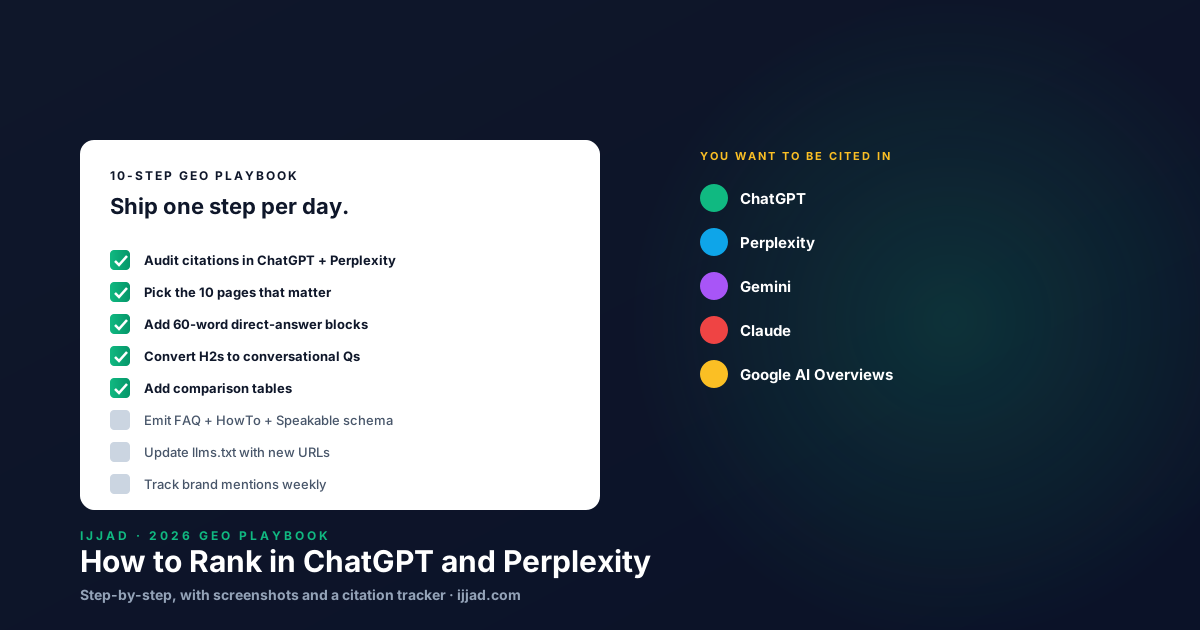
Foundations matter — read What is Generative Engine Optimization? first if you're new to GEO. For the action playbook see How to rank in ChatGPT and Perplexity. For the regional context, AEO for Jordan & Saudi businesses. This page is the bilingual implementation layer.
1. Why bilingual implementation needs separate evidence
Arabic and English experiences can differ in language, layout, queries, returned sources. Treat each as a real product surface and measure it separately.
Reason one — Arabic and English results differ. The same buyer question can return different sources and framing by language. That makes a separate Arabic baseline essential; it does not imply that Arabic citations arrive on a faster fixed timetable.
Reason two — language quality changes usability. Conversational phrasing and dialect can matter for some Saudi, Jordanian, Iraqi buyers, while MSA remains appropriate for formal or pan-regional content. Research the audience instead of forcing every heading into a voice-search question.
Reason three — regional evidence is uneven. Sparse results may reveal useful content gaps, especially in Iraq, but being first with FAQ or LocalBusiness schema does not secure a market. Useful local content and independent authority still have to be earned.
2. The 15-point bilingual checklist
Grouped into four sections: foundations, content, schema, citations. Audit all four, then prioritize the defects that affect real pages and buyer outcomes.
Foundations (2 items)
Set <html lang="en"> on English pages and <html lang="ar" dir="rtl"> on Arabic pages
Language and direction attributes help browsers, assistive technology, and search systems interpret the rendered page. Keep them correct on every localized URL.
Emit reciprocal hreflang pairs for genuine EN/AR equivalents
Each localized URL should include itself and every true equivalent, and every target should reciprocate. Do not connect pages that serve different city or service intent merely because they share a template.
Content (6 items)
Add Arabic FAQs only where they answer real buyer questions
Use the number and depth the page needs; no minimum applies. Emit FAQPage only when those Arabic questions and complete answers are visible and current, with exact rendered parity.
Describe each localized page accurately when schema is justified
Use inLanguage: "ar" for Arabic content and keep every property aligned with what that URL visibly presents. Do not add a schema type merely to target citations; validation and current feature eligibility still apply.
Use Tailwind logical properties (ps-*, pe-*, ms-*, me-*) so RTL flips cleanly
Prefer logical spacing where a component must support both directions, then inspect the rendered result. This reduces duplicated left/right rules but does not replace browser and device testing.
Use an Arabic-capable font stack and test real rendered readability
Choose fonts such as Noto Naskh Arabic, IBM Plex Sans Arabic, or Tajawal when they fit the brand. Tune spacing from browser and device testing rather than a fixed numeric formula.
Give the Arabic page a concise, complete answer where useful
Use the natural length the question needs. Include the brand, geography, or a number only when relevant and supported; do not force a fixed opener or answer formula.
Use clear Arabic headings matched to the audience
Use conversational questions when they reflect real buyer intent, and clear statement headings when those read better. Choose MSA or a regional register from the actual audience and context.
Schema (3 items)
If localized business markup is present, keep it consistent with visible NAP facts
Use Arabic name, address, description only where they match the same real business identity. Structured data supports description and eligibility; it does not make the page citable.
Complete useful Google Business Profile fields in Arabic
Keep name, categories, services, address, phone, hours, descriptions consistent across the website and trusted map profiles. Completeness supports local users but does not guarantee map or AI placement.
Keep Arabic facts accurate in llms.txt if you publish it
llms.txt is optional. Do not add instructions telling an engine which page to cite. If the experiment includes Arabic, mirror only current public facts and canonical URLs.
Citations (4 items)
Write fair Arabic comparisons only when buyers need them
Name and link to relevant alternatives, apply verifiable criteria, and avoid manufactured entity proximity or comparison pages that merely vary a query.
Run citation audits with Arabic prompts, not just English
Use the same stable set of core Arabic buyer questions monthly. Log cited URLs, competitors, framing, referral sessions, and qualified actions; do not assume Arabic citations move on a faster fixed timetable.
Match Arabic language register to the real audience
Test how Saudi, Jordanian, Iraqi buyers phrase the need. Use dialect-aware copy where appropriate and MSA where formal or pan-regional clarity is more useful.
Keep the verified Arabic brand identity consistent
Use the same legitimate Arabic name across the website, Google Business Profile, and trusted profiles you actually maintain. Do not expand low-value directories or create identifiers solely for citation tactics.
3. Worked example — bilingual FAQPage schema
These side-by-side examples belong on their corresponding localized URLs: the English page describes its visible English FAQ, and the Arabic page describes its visible Arabic FAQ. inLanguage labels the content; it does not place a page into a guaranteed citation pool.
{
  "@context": "https://schema.org",
  "@type": "FAQPage",
  "inLanguage": "en",
  "mainEntity": [{
    "@type": "Question",
    "name": "Where is Ijjad based?",
    "acceptedAnswer": {
      "@type": "Answer",
      "text": "Ijjad is based in Amman, Jordan, founded in 2020. Serves Jordan, Saudi Arabia, Iraq, plus the GCC."
    }
  }]
}{
"@context": "https://schema.org",
"@type": "FAQPage",
"inLanguage": "ar",
"mainEntity": [{
"@type": "Question",
"name": "أين تقع إجاد؟",
"acceptedAnswer": {
"@type": "Answer",
"text": "تقع إجاد في عمّان، الأردن، تأسست عام 2020. تخدم الأردن والمملكة العربية السعودية والعراق ودول الخليج."
}
}]
}Critical: do not publish an unreviewed machine translation as the Arabic equivalent. A fluent reviewer should check meaning, terminology, tone, and market fit. Choose MSA or a regional register from audience research and the purpose of the page; there is no documented rule that one dialect earns a voice or AI-citation advantage.
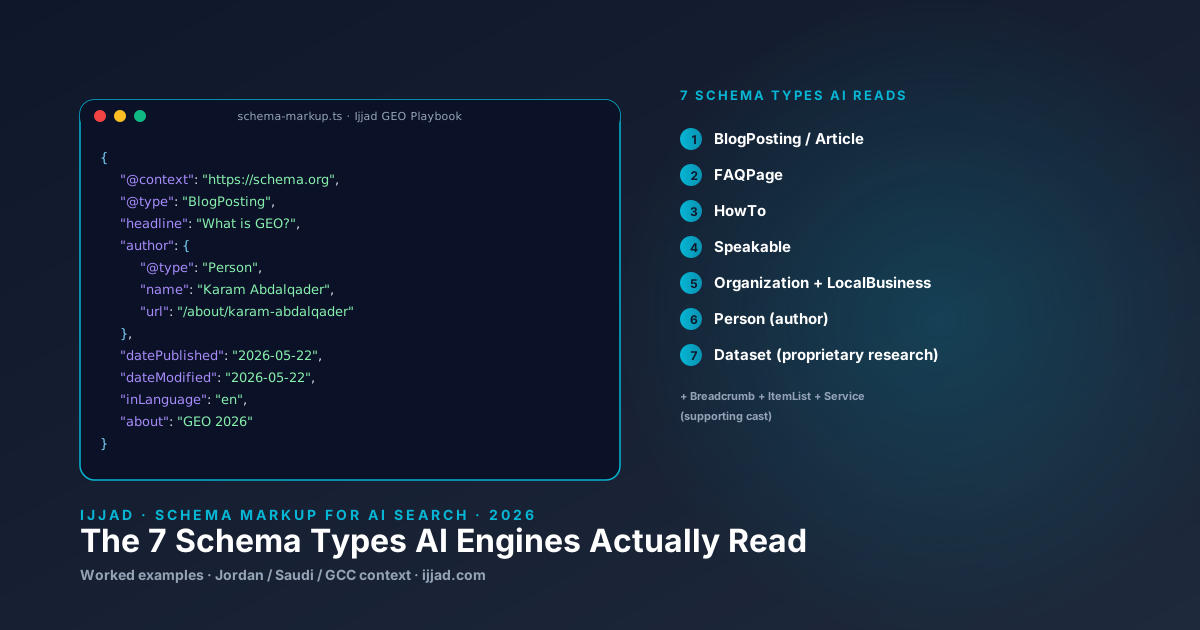
Read the full schema markup deep-dive for all 7 schema types at our Schema markup for AI search 2026 playbook. The same parity rule applies to BlogPosting and Article: each localized URL describes its own visible content and language.
4. The order to ship across an existing site
One possible implementation sequence after the audit, adjusted to the real page count, risk, and content readiness:
- Audit the localized experience. Inventory genuine EN/AR equivalents, inspect query and landing-page data, and identify the pages where language, direction, or content quality affects buyers.
- Repair foundations and copy. Correct lang/dir and reciprocal hreflang, then have a fluent reviewer improve the highest-impact Arabic content in the register its audience expects.
- Test RTL UX and typography. Prefer logical properties where appropriate, choose an Arabic-capable font stack, and inspect representative mobile and desktop browsers rather than relying on one emulator.
- Validate optional description layers. Add or repair only schema that the visible localized page supports, reconcile useful map-profile facts, and keep llms.txt accurate only if you already publish it as an experiment.
- Record a repeatable baseline. Run the rendered technical gates and log the same core Arabic and English buyer questions on the relevant available surfaces for later comparison.
The duration depends on the defects and the number of genuine localized pages; it is not a citation schedule. Rerun the same core buyer questions monthly and join citations to referral sessions and qualified actions.
5. Dialect choice — Khaleeji, Levantine, or Iraqi?
There is no universal Arabic register for every buyer journey. MSA can be appropriate for formal, technical, and pan-regional material; regional wording can help when research shows that a specific audience expects it. Decide from the page's purpose and real customer language, not a voice-search formula.
Registers to evaluate with a fluent market reviewer:
- MSA — a useful starting point for formal or pan-regional content when it matches reader expectations.
- Gulf Arabic — consider local terminology for GCC audiences when interviews, query data, or sales language support it.
- Levantine Arabic — consider it for conversational Jordan and Levant content when the context calls for an informal register.
- Iraqi Arabic — consider it for Iraq-specific conversational content when buyer research supports it.
If evidence is limited, start with clear MSA for formal pan-regional material, test it with intended readers, and adapt terminology from observed queries and conversations. Do not claim a conversion lift without controlled, market-specific evidence.
Want bilingual LLM SEO shipped across your site?
Ijjad audits bilingual Arabic-English search experiences for SMEs and founder teams in Jordan, Saudi Arabia, Iraq, and the GCC. We establish a stable set of English and Arabic buyer questions on the relevant available surfaces, inspect the rendered localization and priority pages, then scope the work from evidence.
Get Started →Frequently asked questions
Do I need separate Arabic and English pages?+−
Can I just translate my English content into Arabic with Google Translate?+−
Should the Arabic version be RTL even on a Latin-default site?+−
What Arabic font should I use?+−
How should I handle conversational Arabic queries?+−
How does this checklist apply to Iraq?+−
Should I add Arabic content to my llms.txt?+−
How long does the full 15-point checklist take to ship?+−
Build a measurable Arabic and English search foundation.
Bilingual audit covering rendered localization, content parity, eligible schema, local trust, and a repeatable cross-engine baseline for Jordan, Saudi Arabia, Iraq, and the GCC.
Get StartedRelated reading on Ijjad:
Source note
Market context: Saudi Arabia's digital economy reached 16.0% of GDP in 2024, according to the General Authority for Statistics, published December 31, 2025. This is why Ijjad treats modern websites, SEO, e-commerce, AI MVPs, and mobile experiences as business infrastructure across Saudi Arabia, Jordan, Iraq, and the GCC.